

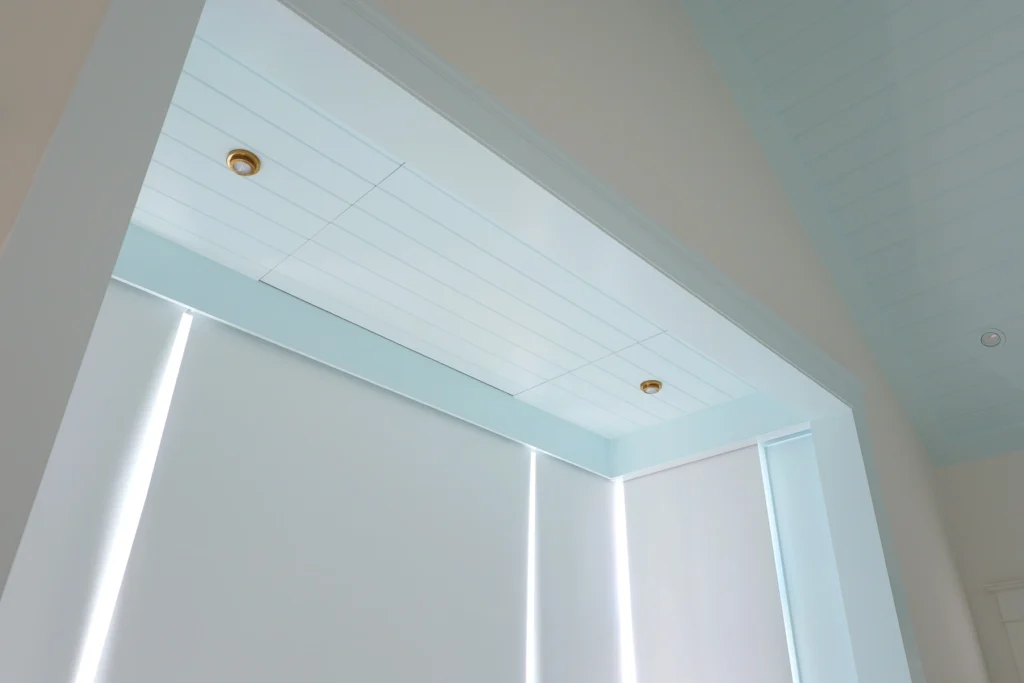
In a newly built Stone Harbor home, the primary bedroom has a vaulted shiplap ceiling, an alcove framing a wall of windows, and no television in sight.
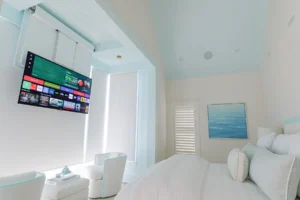
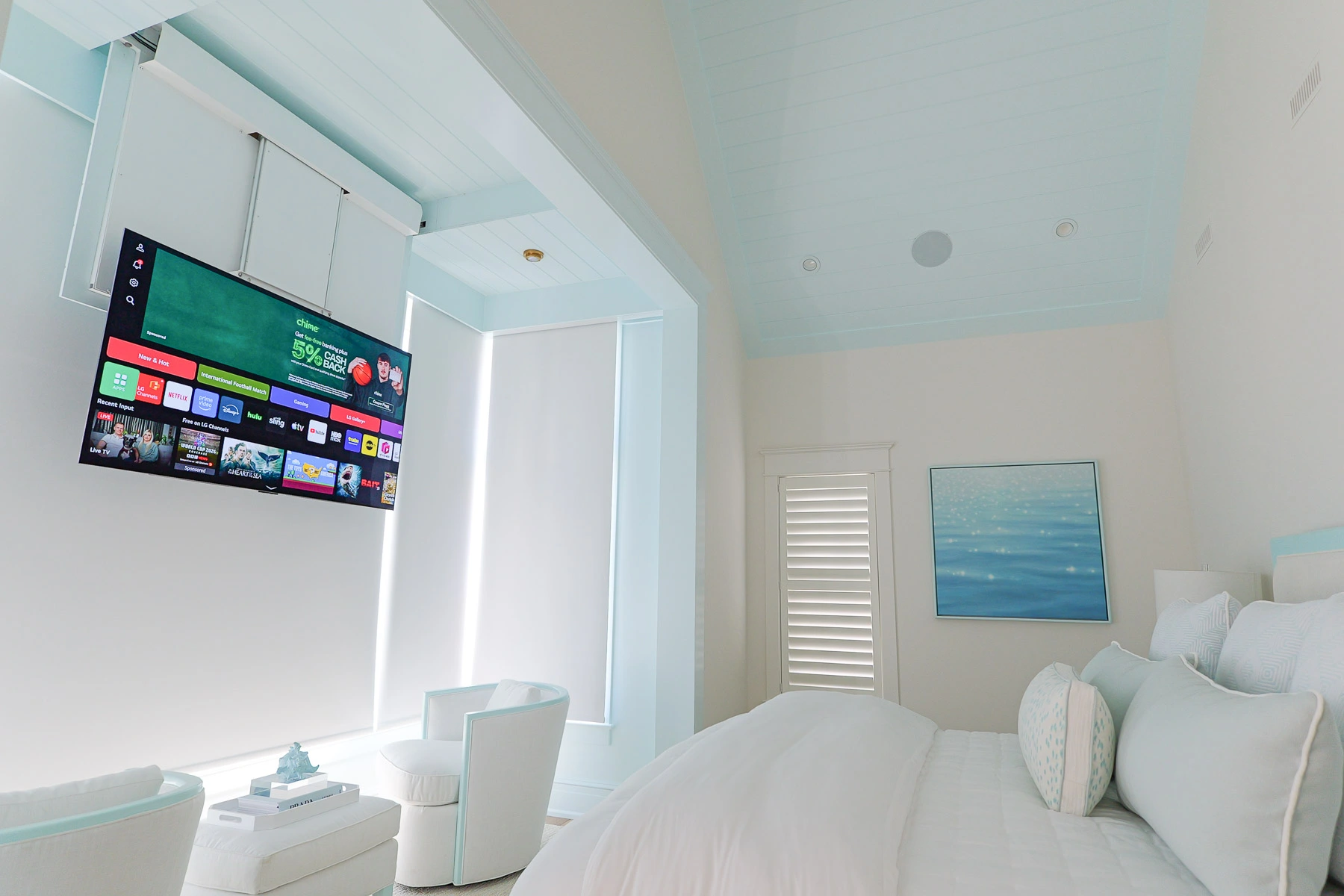
That last part is by design. The TV is in the ceiling — stowed inside a panel that sits flush with the surrounding shiplap, invisible until someone asks for it. When it’s time to watch, the panel folds down on a motorized mechanism and the screen lowers to viewing height. When it’s not, the bedroom is just a bedroom.
This is the project where Cooltronics integrated a full smart home into a spec-built Stone Harbor home — from pre-construction planning through final commissioning — before the buyer even took possession.
Table of Contents
Project at a Glance
- Location: Carnival Bay, Stone Harbor, NJ (Seven Mile Island)
- Client: Spec-built luxury home, fully integrated before buyer took possession
- The standout: A motorized drop-down ceiling TV in the primary bedroom — stowed flush within the shiplap alcove ceiling, deployed to viewing height on demand
- Systems installed: Structured wiring & networking with Araknis enterprise-grade router and 44-port PoE switch, distributed WAPs for whole-home Wi-Fi, Lutron HomeWorks lighting and motorized shade control, Samsung Frame TVs, Samsung Terrace rooftop outdoor TV, motorized ceiling drop-down TV, IC Realtime video doorbell integrated with surveillance DVR, surveillance cameras and 24/7 monitoring, Ecobee smart thermostat, custom-painted color-matched exterior speakers
- Integrator: Cooltronics & Security by Private Eyes— serving Stone Harbor and Seven Mile Island since 1984; Lutron Silver Integrator
A Spec-Built Stone Harbor Smart Home
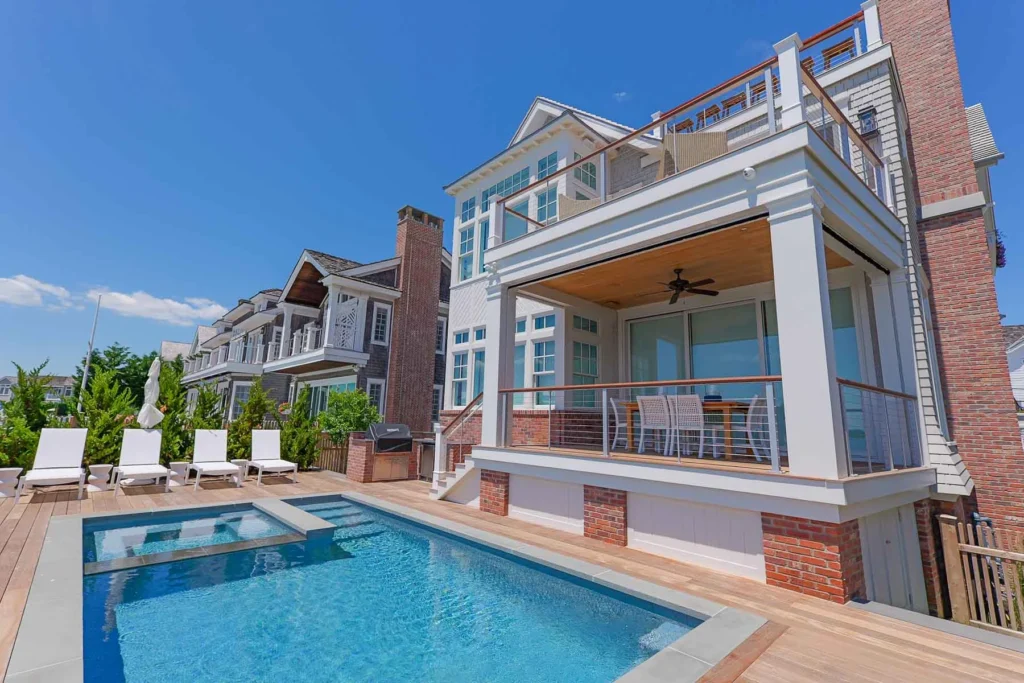
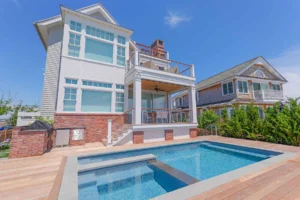
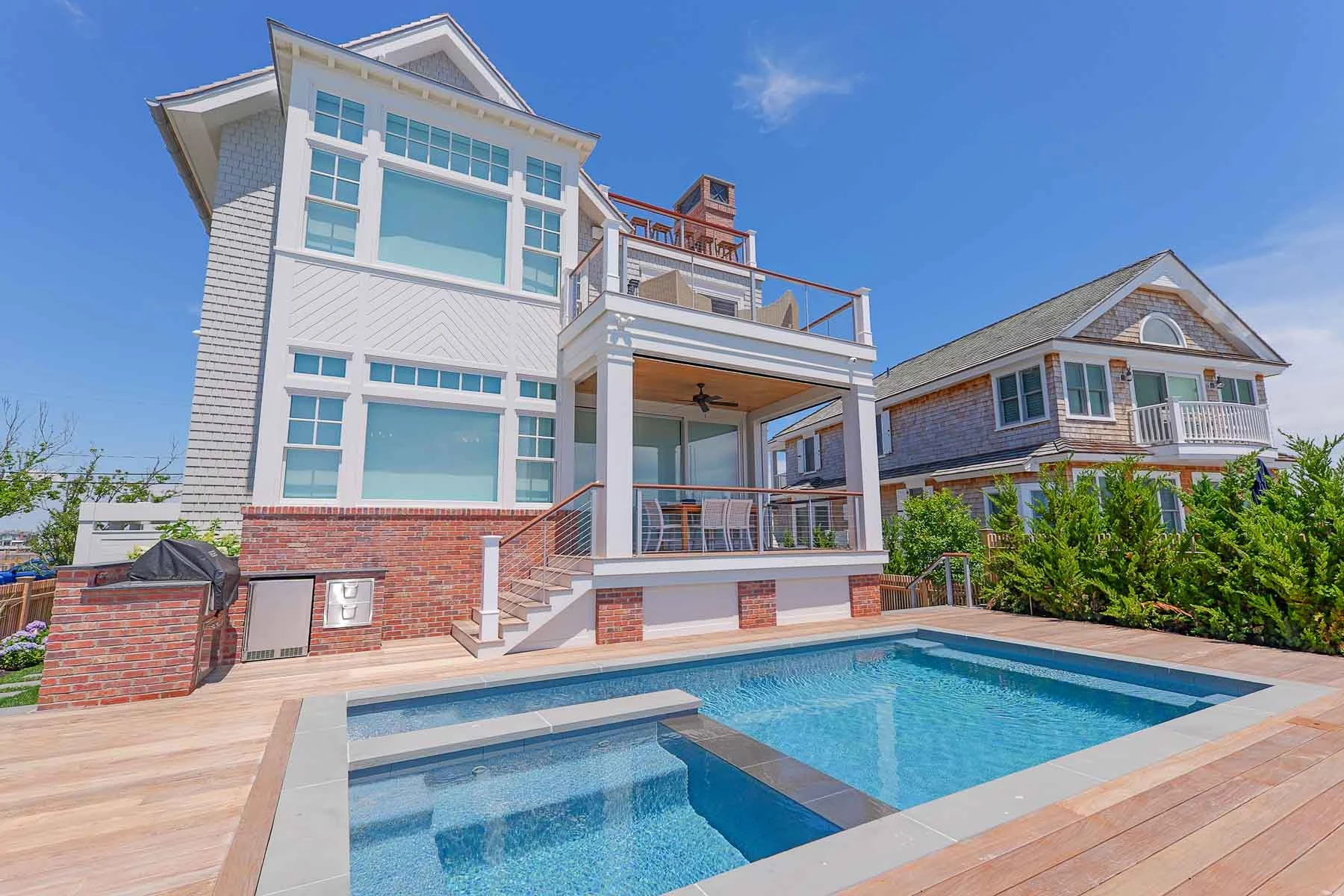
The home sits on Stone Harbor’s Carnival Bay — a three-story shingle-style build with private docks, a pool deck, covered porches on multiple levels, and a rooftop terrace with views across the water. Classic coastal architecture, the kind of home Stone Harbor is known for.
What makes this project different from some of the work we document is the context: this was a spec home. Built for the luxury Stone Harbor market, designed and finished before the buyer was identified. Every system Cooltronics installed — lighting, shading, audio, video, networking, security, climate — was planned, wired, and commissioned as part of the original build, not added after the fact.
Cooltronics was brought in during initial layout and planning, working alongside the builder, designer, and architect to scope the integration from the start. Wiring runs were coordinated with the electrician during framing. Equipment locations were specified before drywall went up. By the time the home was ready for market, the smart home system wasn’t an upgrade or an add-on. It was part of the house.
The eventual buyer inherited a home that was already fully integrated — move in, pick up a phone, and everything works. We even schedule a demo/training day for the new buyers when they are ready to move in.
The Bedroom That Hides Its Own TV
The Problem.
The primary bedroom is one of the home’s strongest rooms — a vaulted shiplap ceiling, an alcove framing a wall of windows with Lutron motorized shades, and a sitting area with natural light from multiple directions. A wall-mounted TV would dominate the space. It would be the first thing you see walking in, and it would fight the architecture rather than defer to it.
For a spec home, this matters even more than usual. The builder is designing for a buyer who hasn’t been identified yet — someone whose tastes are unknown but whose expectations are high. A bedroom with a visible TV reads as a media room. A bedroom without visible technology reads as a retreat. The goal was the second, with the capability of the first.
The Solution.
A motorized drop-down ceiling TV, integrated into the alcove ceiling itself.
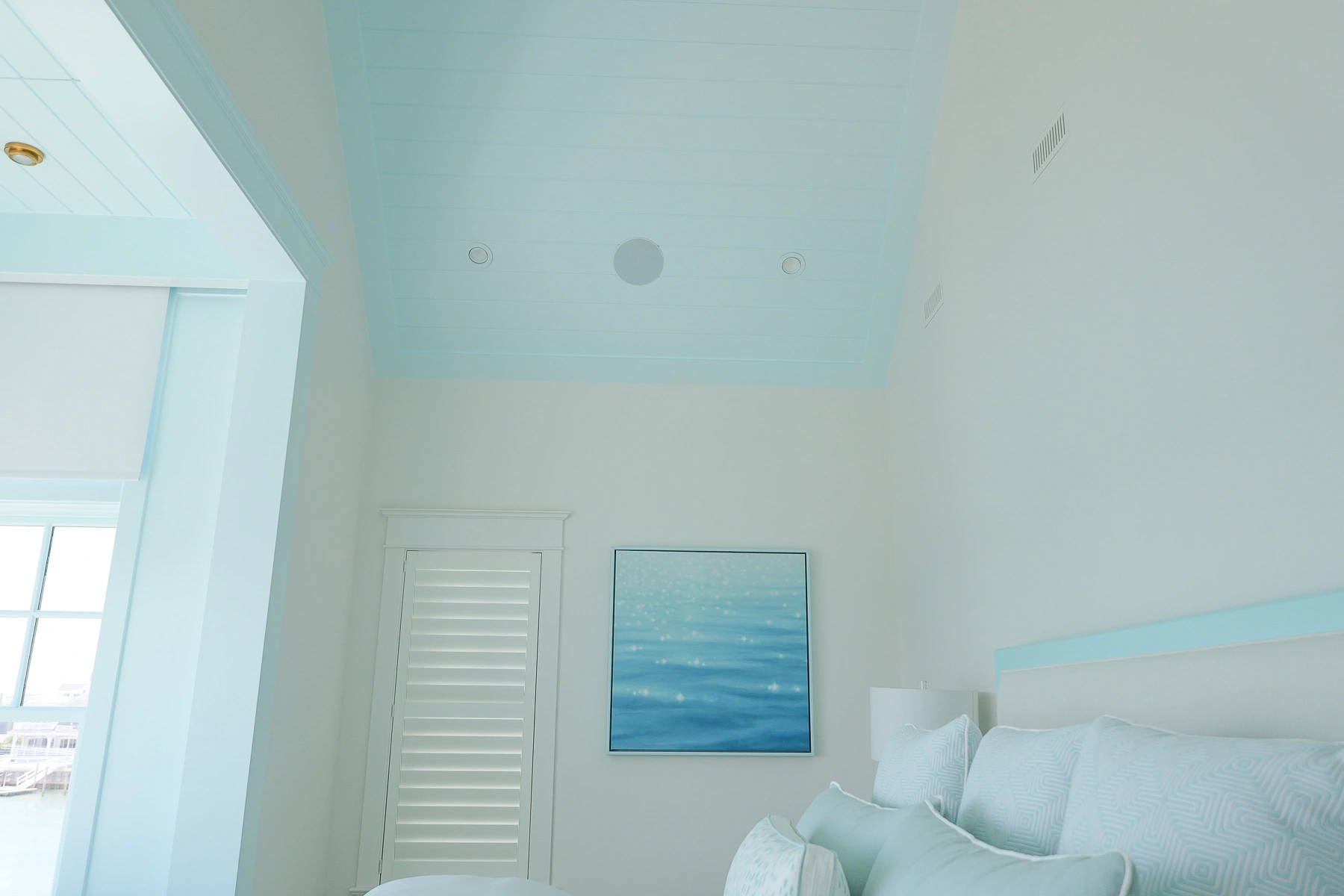
Here’s how it works: a panel of the shiplap ceiling — matching the surrounding material in color and grain — is mounted on a motorized mechanism. When the TV is wanted, the panel folds down and the screen lowers to viewing height, positioned for comfortable watching from the bed or the sitting area below. When it’s not, the panel returns to its flush position. The only evidence the mechanism exists is a subtle seam in the ceiling that you’d never notice unless you knew to look for it.
The execution required precise coordination during framing. The alcove ceiling had to be built with the structural support, clearance, and power/signal runs to accommodate the mechanism — none of which could be added after the fact. This is the kind of install that only works when the integrator is involved from the start.
Behind the alcove, Lutron motorized shades operate independently on the windows. The drop-down TV and the shade system share the same architectural space, but run as separate systems on the home’s Lutron backbone — each controllable individually, each disappearing when not in use. Two integrated systems coexisting cleanly in the same envelope, without either one compromising the other.
“A bedroom should feel like a bedroom. The technology should be there when you want it and gone when you don’t.”
See it in Action!
Integrated from the Ground Up
The drop-down TV gets the attention, but it sits inside a larger story: a comprehensive smart home integration that was designed alongside the home itself, not retrofitted into it.
Cooltronics was brought in during initial layout and planning — before framing, before wiring, before the builder had to make the decisions that would dictate what the home could and couldn’t support after the walls closed up. That timing matters more than most people realize.
While the builder was framing walls, Cooltronics was running structured wiring — Cat6A throughout the home, with dedicated runs for AV, security, and control.
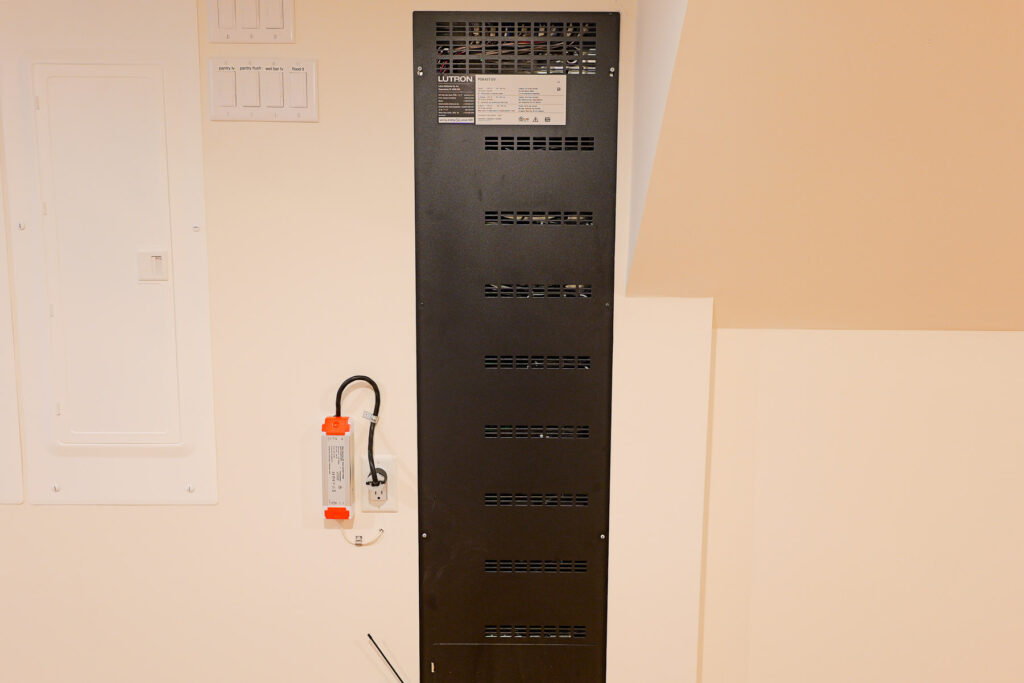
While the electrician was pulling circuits, Cooltronics was coordinating equipment locations: where the Lutron HomeWorks panel would live, where the equipment rack would go, where every wireless access point, camera, speaker, and control surface would be mounted. By the time drywall went up, every wire was in place and every device location was set.
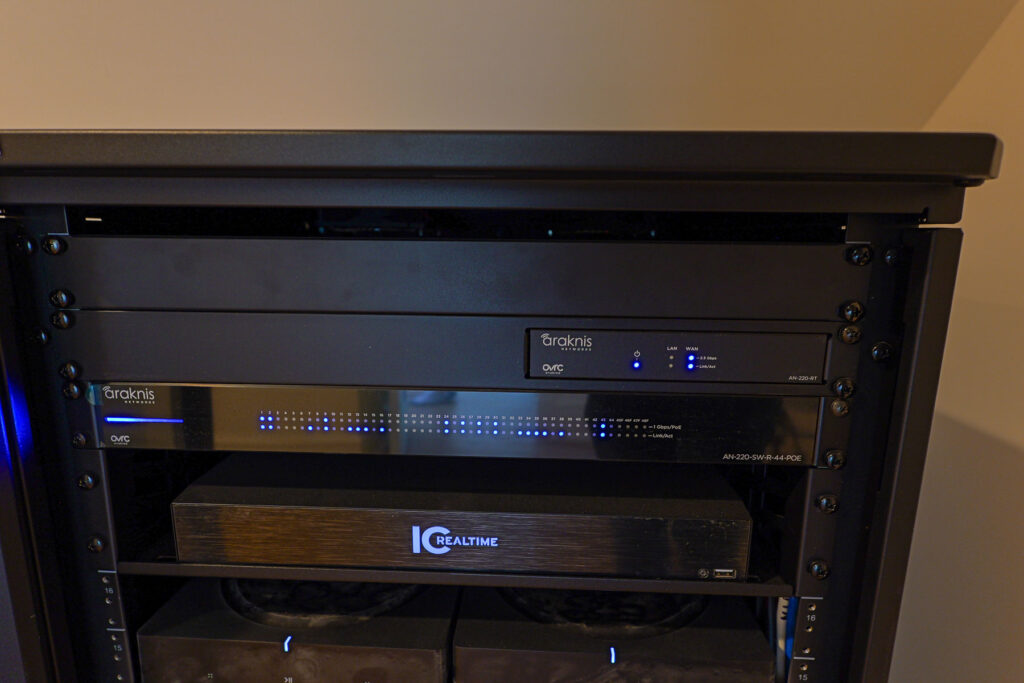
The result is a home where the infrastructure is invisible. No exposed conduits, no retrofitted cable runs, no equipment crammed into closets that weren’t designed for it. The Araknis networking gear and IC Realtime surveillance DVR sit in a properly ventilated Strong rack enclosure. The Lutron HomeWorks panel is mounted in the utility area with every zone labeled and organized. The wireless access points are distributed for seamless coverage across every floor and the outdoor spaces.
This is what pre-construction integration looks like when it’s done well — and it’s why we consistently advocate for being involved at framing rather than after move-in.
Every System, One Roof
The infrastructure supports a full scope of integrated systems — each one designed, installed, and commissioned by Cooltronics as part of a single cohesive project.
Lutron Lighting and Motorized Shade Control
A Lutron HomeWorks system controls lighting and motorized shades across every floor. Scenes are programmed for the way the home is actually lived in — evening, entertaining, away, sleep. The motorized shades in the primary bedroom alcove operate behind the drop-down TV, and both systems coexist without interference. Keypads throughout the home give tactile, wall-mounted control alongside app access.
Learn more about Lutron lighting and shade control.
Samsung Frame TVs and Samsung Terrace Outdoor TV
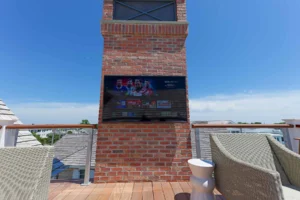
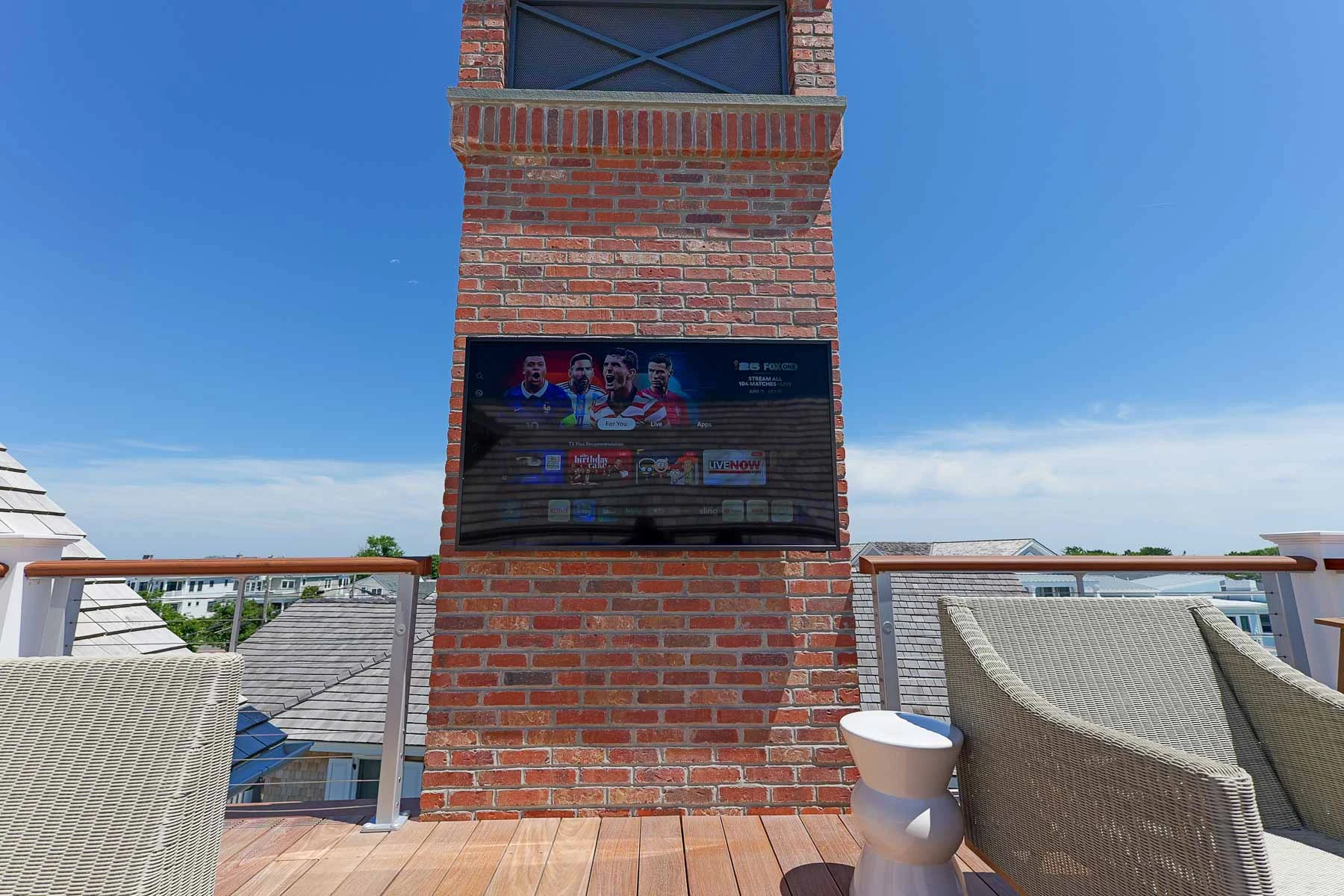
Samsung Frame TVs in the main living areas display artwork when they’re off — they read as framed prints, not screens. On the third-floor rooftop terrace, a Samsung Terrace outdoor TV is mounted on the brick chimney column, fully exposed to direct sun, wind, and salt air. It’s rated for exactly that environment, and the branded Samsung weather cover protects it when not in use.
Two distinct TV environments — indoor art display and rooftop outdoor entertainment — handled by the same integrator, on the same control backbone.
Learn more about whole home audio and video.
Custom-Painted Exterior Speakers
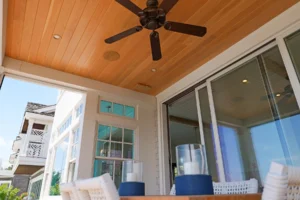
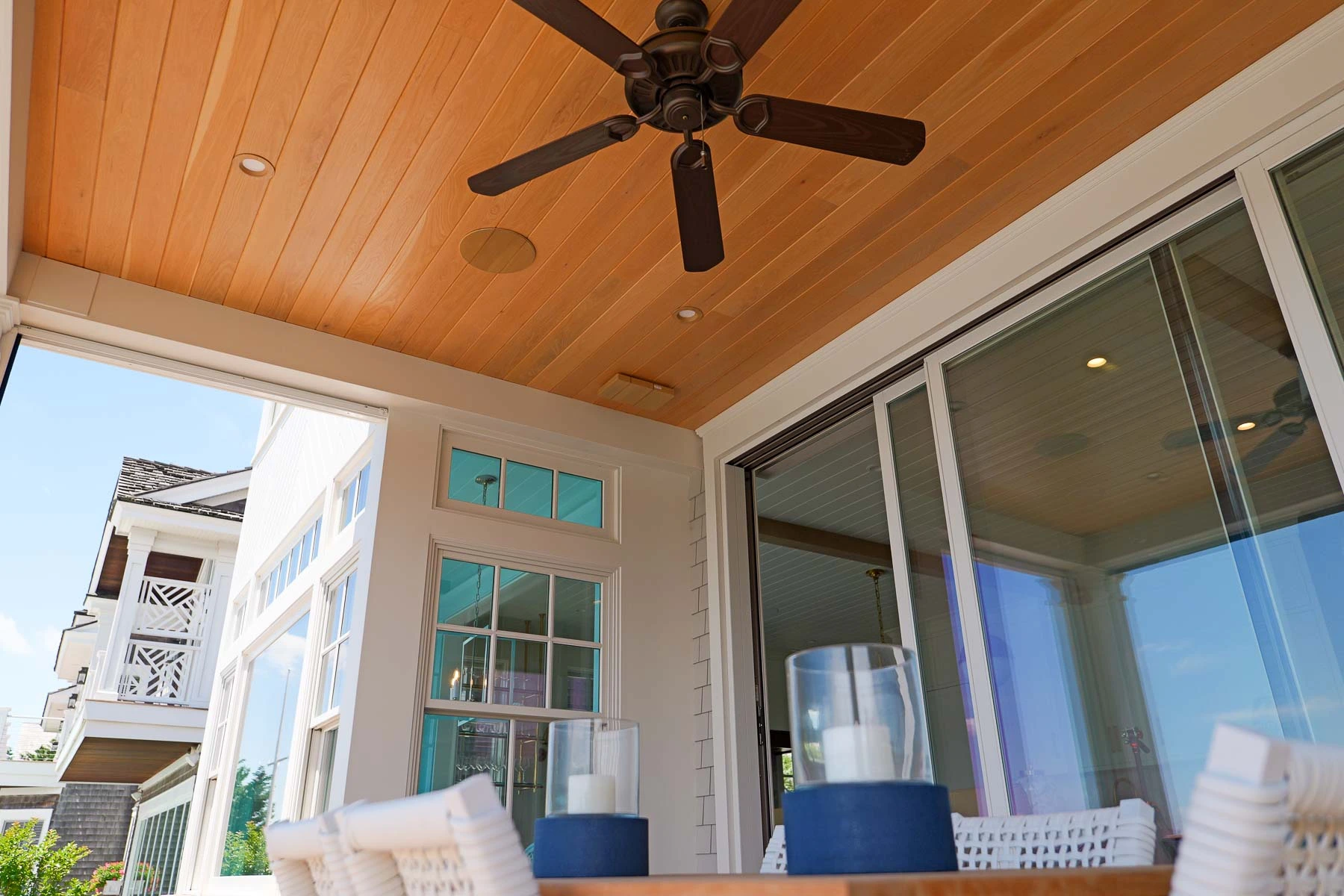
On the covered porches, in-ceiling speakers are custom-painted to match the natural wood ceiling — the same approach Cooltronics uses across projects on Seven Mile Island. The technology disappears into the architecture. You hear the speakers; you don’t see them. For a home with marina views from the porch, the outdoor audio needs to complement the setting, not compete with it.
IC Realtime Video Doorbell Integration — No Separate App
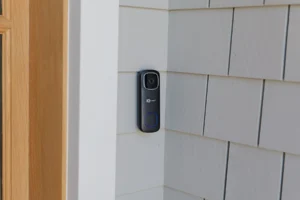
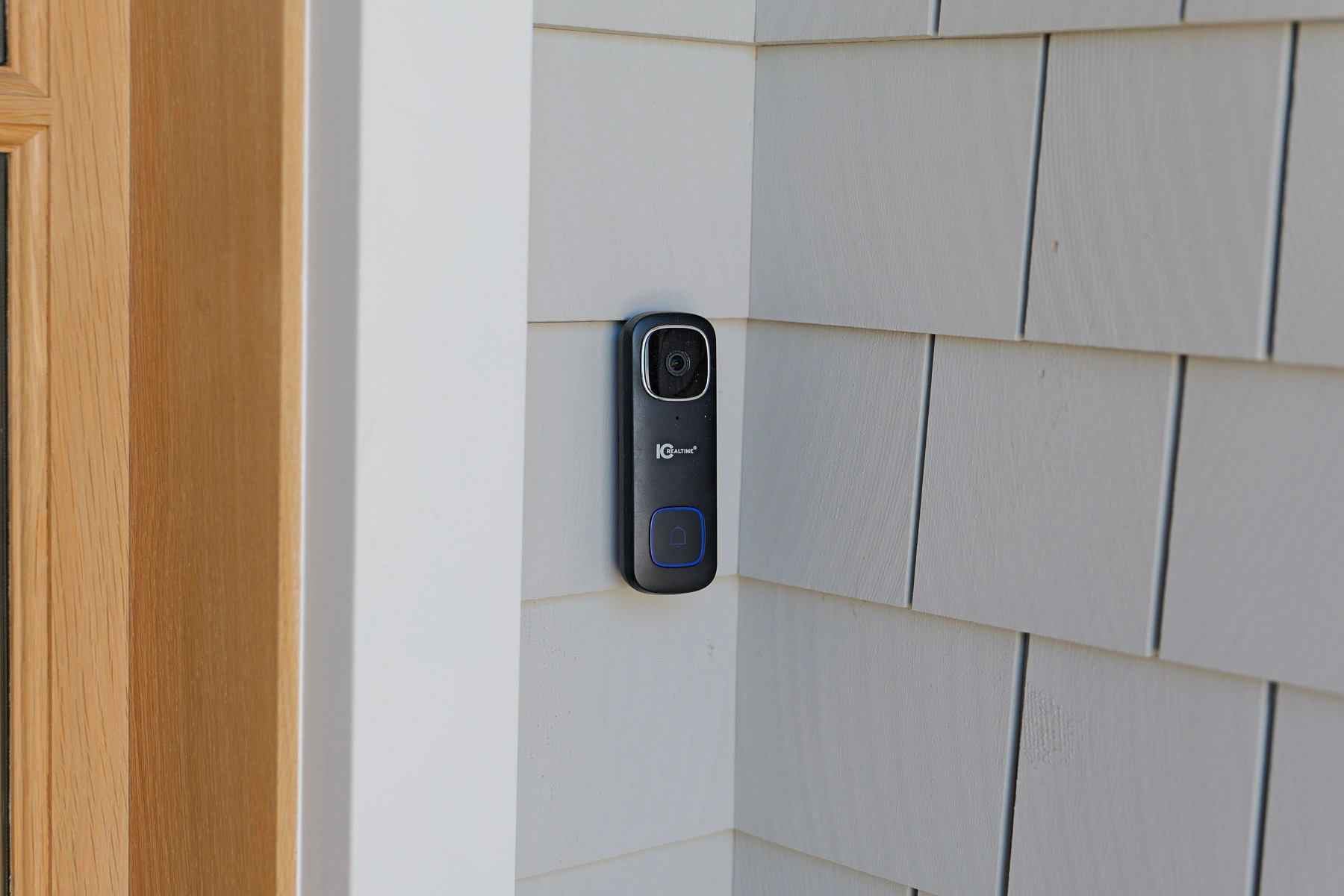
Most video doorbells require their own standalone app. Ring has one. Nest has one. Every brand has one. The IC Realtime doorbell installed at this home’s front entrance integrates directly with the home’s surveillance camera DVR — the same DVR that records every other camera on the property. The homeowner sees the doorbell feed in the same interface as the security cameras, the same recordings, the same timeline. One system. One app. No app fatigue.
It’s a small product-selection decision that reflects a larger design principle: every component should reduce complexity, not add another icon to the homeowner’s phone.
Learn more about CoolTronics’ Security by Private Eyes Services
Ecobee Smart Thermostat and Climate Integration
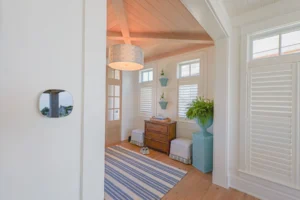
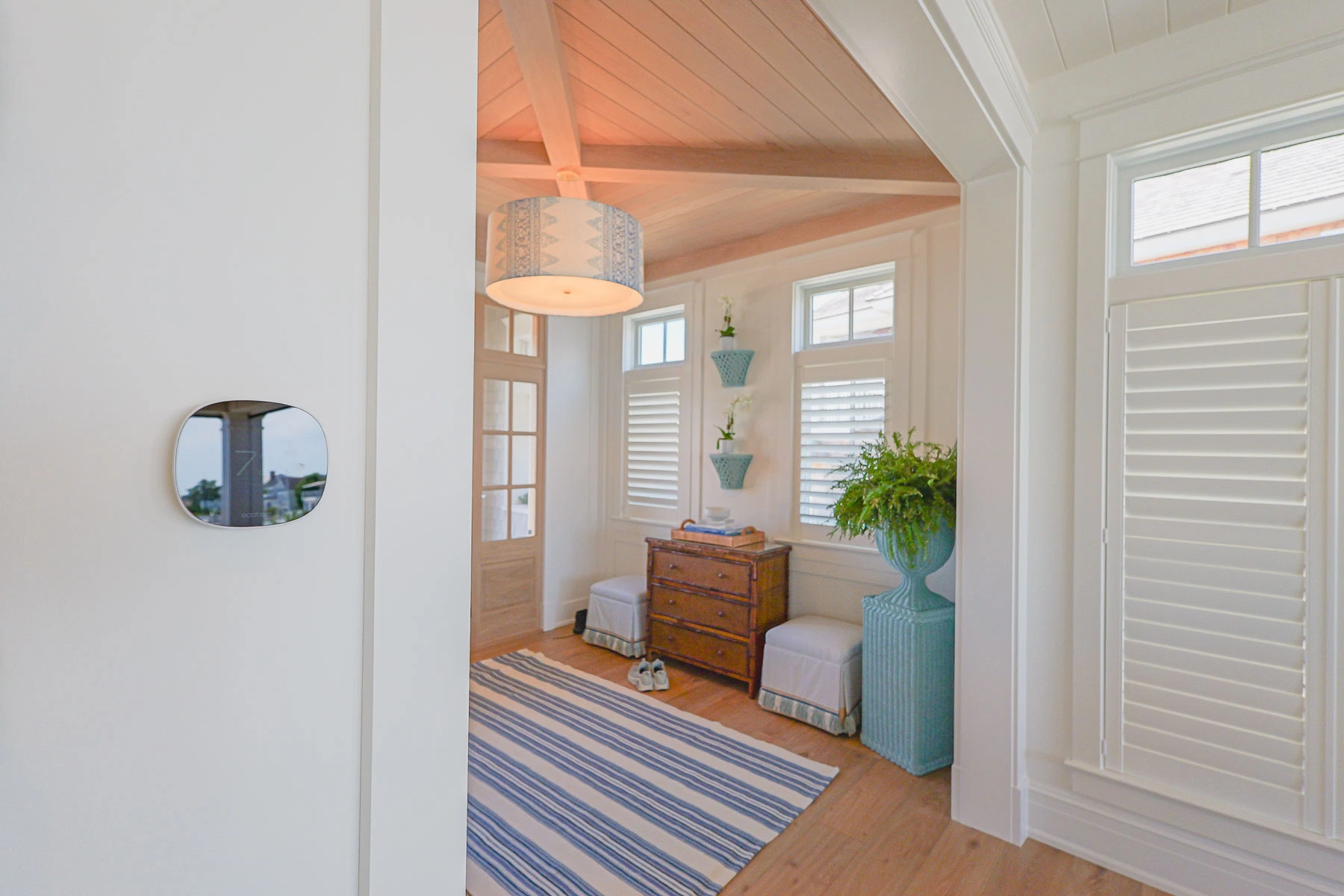
An Ecobee smart thermostat in the foyer ties climate control into the home’s broader system — remote temperature adjustment, scheduling, and occupancy sensing. For a seasonal home, pre-arrival climate control is a real comfort consideration: the home is at the right temperature when the owner walks through the door, regardless of how long it’s been unoccupied.
Structured Wiring, Networking, and Whole-Home Wi-Fi
Every cohesive smart home starts with the wiring you can’t see. Cat6A throughout the home for data, fiber to the central rack for backbone speed, dedicated runs for AV, security, and control. Pre-wired during framing in coordination with the builder — the right time to do this work, before drywall makes everything ten times harder. Equipment lives in a conditioned room, organized and labeled so any technician who comes through in ten years can find what they need.
Learn more about structured wiring and networking.
Security by Private Eyes — One Roof, One Team
Cooltronics’ in-house security division, Security by Private Eyes, handles cameras, access control, leak detection, and 24/7 monitored alarm service — fully integrated with the rest of the system. One company, one technician who knows the home, one phone number when something needs attention. For a seasonally-occupied oceanfront home, this matters: a leak detected at 3 a.m. in February goes to the same team that installed the system, not a national call center reading from a script.
Learn more about Security by Private Eyes.



What Spec Homes Show Us About Smart Home Integration
Every project reinforces certain principles. This one made four of them especially clear.
The best integration happens before drywall. Pre-construction coordination with the builder means every wire is where it should be, every speaker is flush, every camera angle is deliberate. Retrofitting the same scope after the fact costs more, takes longer, and compromises the result. If you’re building or renovating in Stone Harbor, the conversation with your integrator should start when the architect’s drawings are still in progress — not when the painter is finishing.
A spec home with integrated smart technology is a more valuable spec home. Buyers at this price point increasingly expect integration. A home that’s already wired, automated, and monitored is ready to live in on day one. That readiness is a genuine selling point — and it positions the builder as someone who thinks about how the home will actually be experienced, not just how it looks in photos.
“One app, one interface” isn’t a slogan — it’s a design decision. The IC Realtime doorbell choice is a small example of a larger principle: every product selection should simplify the homeowner’s experience, not add another app to manage. When you’re choosing between two products that do the same thing, the one that integrates into the existing system wins over the one that requires its own island.
Technology should disappear when it’s not needed. The drop-down ceiling TV, the color-matched porch speakers, the flush in-ceiling audio throughout the house — every element is designed to be invisible until it’s called upon. The best compliment a smart home can receive is when a guest doesn’t notice the technology at all, and then it works perfectly the moment someone reaches for it.
Considering a Smart Home Project in Stone Harbor?
Cooltronics has been designing and installing smart home, AV, lighting, shading, and integrated security systems in Stone Harbor and across Seven Mile Island since 1984. Whether you’re starting a new build, purchasing a spec home, renovating, or upgrading what’s already in place, we’d love to talk through what’s possible.