

Most homeowners start thinking about TVs, speakers, lighting scenes and security cameras once they can walk through framed rooms and picture how they’ll actually live in the house. By that point, however, some of the cleanest options for concealing wires, placing speakers and centralizing equipment may already be limited.
Smart home installation for new construction works best when it happens alongside architectural, electrical and interior design planning — not after the drywall goes up.
At CoolTronics, we review architectural plans and coordinate directly with homeowners, builders, electricians, architects and designers on custom and secondary homes throughout the Jersey Shore.
Table of Contents
Planning at a Glance
- Best time to start: Design or early construction, before electrical and low-voltage rough-in decisions are finalized
- What we review: Architectural plans, TV and speaker locations, lighting zones, motorized shades, network coverage, camera sightlines, equipment-rack space, outdoor living areas
- Who we coordinate with: Homeowners, builders, architects, electricians, interior designers, cabinetmakers, HVAC, window-treatment and landscape professionals
- Systems we plan for: Home automation and voice control, Lutron lighting and motorized shades, whole-home audio, TVs and video, structured wiring and networking, security and surveillance
- Where we work: Avalon, Stone Harbor, Sea Isle City, Ocean City, Cape May and the wider Seven Mile Island and Cape May County region
When Should You Involve a Smart Home Installer?
Whenever possible, a smart home integrator should become involved during the design and planning phase, before electrical and low-voltage rough-in decisions are finalized.
The exact timing varies by project. Some homeowners contact us as soon as preliminary architectural drawings are available. Others bring us in after selecting their builder. What matters most is beginning the conversation before wiring paths, device locations and equipment spaces are locked in.
Early involvement allows the integration team to review the architectural plans, proposed TV locations, indoor and outdoor speaker placement, lighting zones, motorized shade requirements, network coverage, security camera sightlines and equipment-rack needs. It also gives the builder and electrician a coordinated technology plan to work from instead of addressing individual decisions as construction progresses.
What Should Be Planned Before the Walls Are Closed?
Home Automation and Control
Before selecting individual products, it helps to consider how the household will actually use the home. Will lighting, audio, TVs, climate and shades be managed through one control experience? Will family members prefer voice control, wall keypads, mobile apps or touchscreens? Will guests need a simple way to operate the most important systems without a tutorial? These decisions can affect wiring, device placement and equipment requirements.
Josh.ai is one platform we use for private, voice-driven control of compatible systems throughout the home. The right approach depends on the size of the project, which systems are being integrated and how the household prefers to interact with them.
Lighting Control and Motorized Shades
Lighting is one of the areas where early planning has the most visible impact. Lighting zones, keypad locations, dimmer placement and load requirements should be coordinated with the electrical plan before rough-in. Motorized shades introduce additional considerations, including power routing, recessed pockets, trim details and how the shades will manage privacy, glare and daylight.
We use Lutron for lighting and motorized shade control. Planning these systems alongside the electrician, builder and interior designer helps the controls feel like a natural part of the home rather than something added after the rooms have already been designed.

Whole-Home Audio
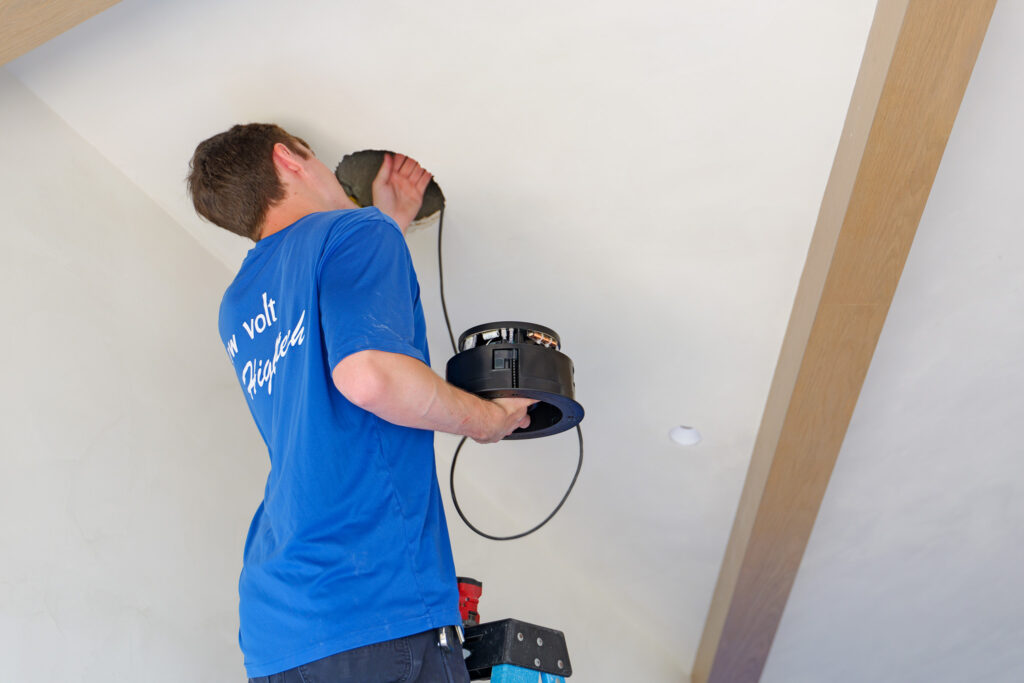
Good residential audio is not simply about installing more speakers. It is about creating comfortable, consistent coverage in the rooms and outdoor spaces where people actually spend time. Speaker locations should be planned around furniture, ceiling details, room size and how each space will be used. Indoor and outdoor listening areas may also need separate audio zones, while amplifiers and source equipment require an accessible, properly ventilated location.
We regularly install architectural speakers from Sonance and James Loudspeaker. Properly selected speakers can integrate discreetly into walls and ceilings, and on appropriate projects, speaker grilles can be finished to coordinate with the surrounding surface. Outdoor audio requires its own planning — covered porches, pool decks and landscaped areas may use different speaker styles and placement strategies to create balanced sound without depending on excessive volume.
TVs and Video
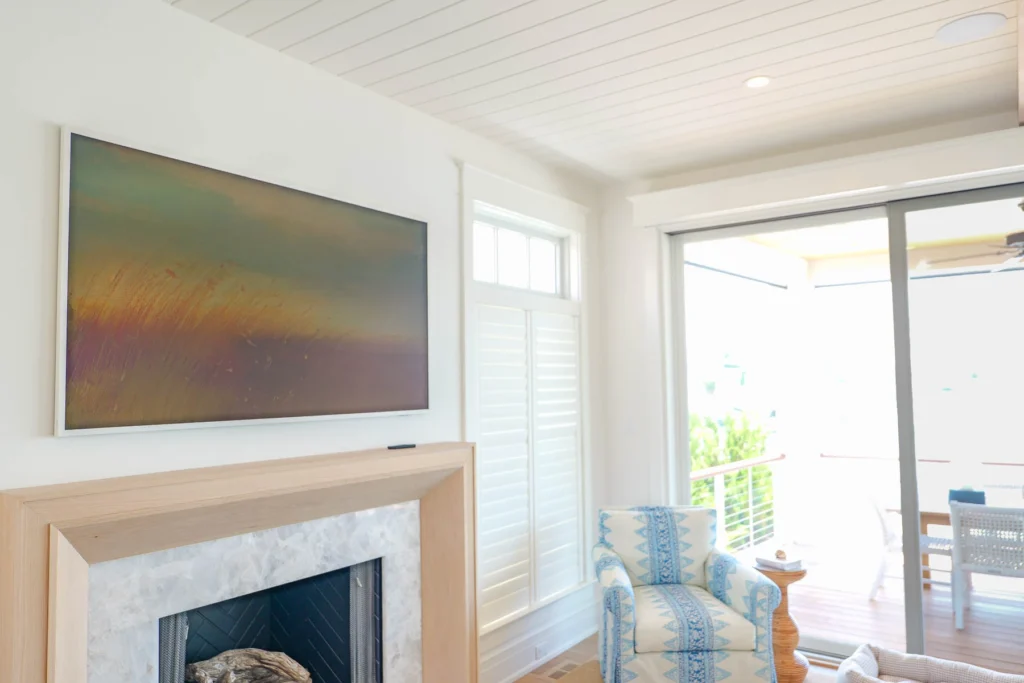
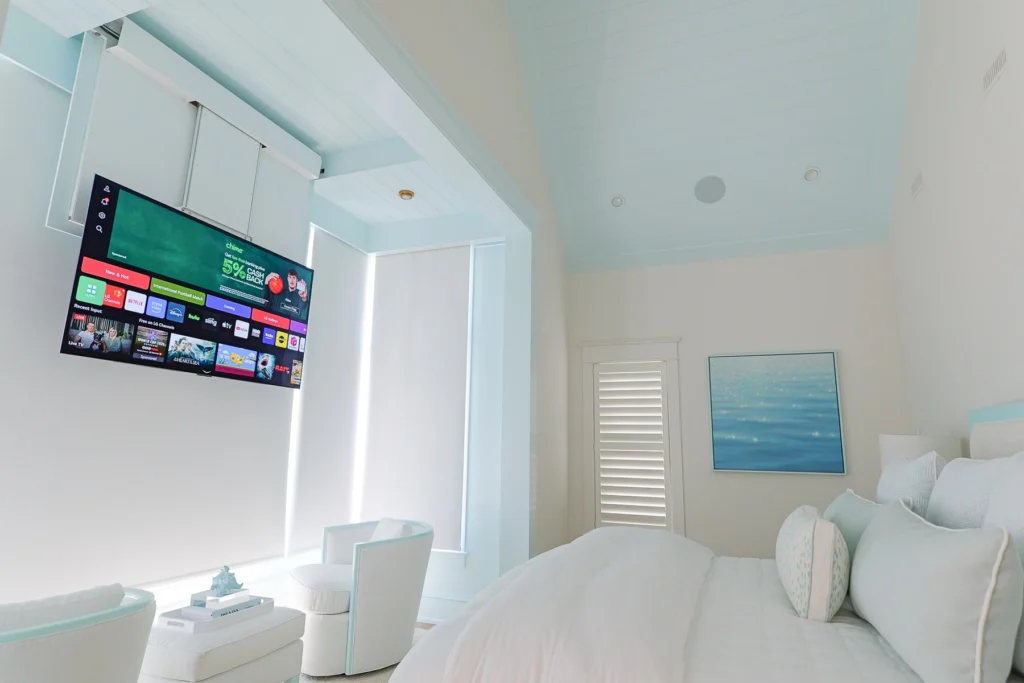
TV installation is much easier to plan before framing, cabinetry and finishes are complete. The project team should consider viewing angles, mounting height, power and network connections, recessed boxes, cabinetry and future service access. Motorized lifts, art-style TVs and other concealment options may also require structural or millwork coordination. Outdoor TVs introduce additional considerations involving placement, mounting, sunlight and exposure to the environment.
We regularly work with Samsung TVs and are a Samsung Platinum Direct Dealer, although the right display depends on the room, lighting conditions and how the space will be used.
Home Networking and Wi-Fi
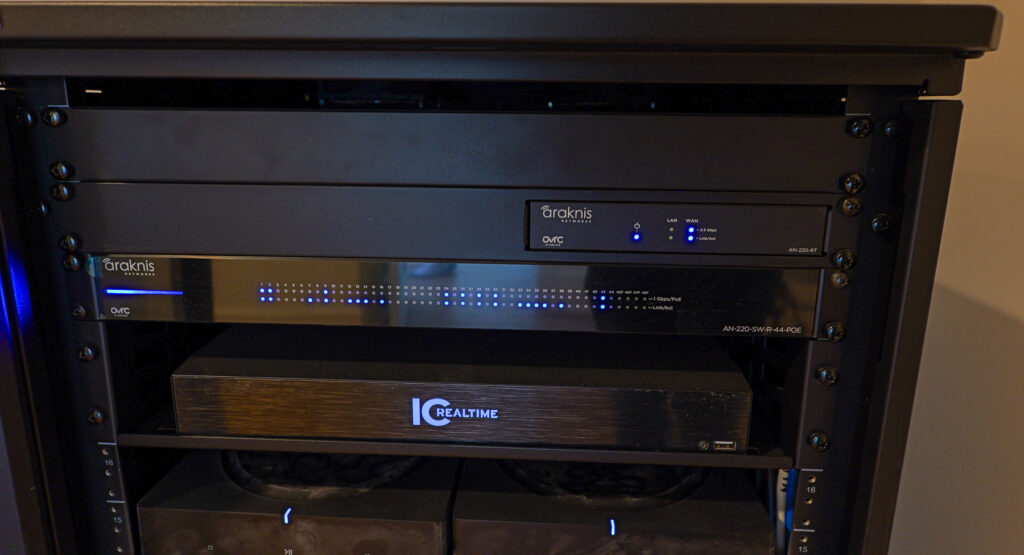
The home network supports nearly every other connected system in the residence. Streaming, automation, security cameras, doorbells, thermostats, mobile devices and remote access all depend on reliable connectivity. A professionally planned network may include structured cabling, hardwired connections, centralized equipment and wireless access points positioned according to the home’s layout and construction.
We use Araknis on many projects, along with eero and select Ubiquiti solutions where appropriate to the property and system requirements. Larger floor plans, dense construction materials and outdoor living areas often require multiple access points designed around real-world coverage — not simply installed wherever placement is easiest.
Security and Surveillance
Security planning should begin before camera locations, doorbell wiring and alarm-device placement become difficult to change. Camera sightlines should be selected based on entrances, driveways, outdoor areas and the specific layout of the property. The team should also plan video doorbell wiring, alarm sensors, keypad locations, recording equipment and remote access.
Security and professional monitoring services are handled through Security by Private Eyes, our in-house division. Depending on the project, surveillance may include IC Realtime or Turing Video cameras and recording equipment, while Honeywell systems may be used for intrusion detection and alarm control. This planning is especially valuable for secondary residences that may be unoccupied for extended periods.
A Pre-Rough-In Smart Home Checklist
Before electrical and low-voltage rough-in decisions are finalized, the homeowner and project team should confirm:
- TV and speaker locations
- Lighting-control requirements
- Motorized shade power and pocket details
- Indoor and outdoor Wi-Fi coverage
- Security camera and video doorbell locations
- Equipment-rack space, ventilation and service access
- Outdoor audio and entertainment plans
- Network connections for TVs and access points
- Future wiring and expansion needs
Not every home will require every system. Reviewing the full list early simply helps prevent important areas from being overlooked.
Why Does Prewiring Matter in a Wireless Home
“Wireless” describes how certain devices communicate. It does not mean the home no longer needs infrastructure. Connected homes still rely on reliable power, hardwired network backbones, properly placed wireless access points, speaker wiring, camera cabling, motorized shade power and centralized equipment locations.
Wireless systems generally perform best when they are supported by a properly designed wired and wireless network. Cutting back on infrastructure during rough-in can create limitations later — weak coverage in a back bedroom, equipment squeezed into a poorly ventilated closet or speaker wiring that must be fished through a finished ceiling.
Thoughtful prewiring also provides more flexibility for future upgrades, even when every planned connection is not used immediately.
How Early Planning Improves the Finished Home
Smart home installation for new construction gives you options that retrofits don’t. The benefits of early planning are visible in both the appearance of the home and the way its systems perform. Technology can be coordinated with cabinetry, furniture, ceilings, window treatments and other finishes before those decisions become difficult to change. This can result in cleaner installations, fewer visible wires, better TV and speaker placement and more discreet controls.
Early planning can also improve Wi-Fi coverage, reduce avoidable cutting and patching, simplify future expansion and create centralized equipment locations that are easier to access and service. It does not eliminate every construction change. It does, however, provide more flexibility and can reduce unnecessary compromises as the project develops.
Who Does the Smart Home Integrator Coordinate With?
We work from architectural plans and coordinate directly with the broader project team. Depending on the scope of the home, that may include homeowners, builders, architects, electricians, interior designers, cabinetmakers, HVAC professionals, window-treatment specialists, and landscape and pool contractors.
This coordination helps ensure the technology is considered before construction and design decisions become difficult or expensive to change.
Common Smart Home Planning Mistakes
Waiting Until After Drywall
Once the walls are closed, some concealed wiring routes, speaker locations and centralized equipment options become more difficult to achieve. Retrofit solutions may still be available, but planning before drywall generally provides greater flexibility and more options for discreet installation.
Assuming One Router Will Cover the Entire Property
A single consumer router may not provide dependable coverage throughout a large custom home. Multiple floors, dense building materials, distant bedrooms and outdoor areas can all affect Wi-Fi performance. Wireless access points should be planned around the structure and the spaces where reliable coverage is actually needed.
Forgetting Patios, Pools and Outdoor Living Areas
Outdoor technology is often considered after the interior plans are nearly complete. Outdoor TVs, landscape audio, covered-porch speakers, Wi-Fi and surveillance cameras are easier to coordinate when they are included in the original construction plan.
Failing to Reserve Equipment Space
Network hardware, amplifiers, security recorders and control equipment require adequate space, ventilation and service access. An undersized or poorly located equipment area can make maintenance, troubleshooting and future upgrades more difficult.
Choosing Device Locations Without Considering the Room Design
TVs, speakers, cameras, keypads and shades should work with furniture, cabinetry, ceilings and window treatments. Technology and interior design should be planned together rather than competing for the same space after decisions have already been finalized.
Treating Security as a Last-Minute Addition
Camera sightlines, doorbell wiring and alarm-device locations are easier to plan before exterior finishes and interior walls are complete. Early coordination also allows the security system to integrate more naturally with the home’s network and broader technology infrastructure.
Special Considerations for a Jersey Shore or Non-Primary Residence
Custom and secondary residences throughout Cape May County and the southern New Jersey shore often have priorities that differ from those of a year-round primary home. Many shore homes remain unoccupied for extended periods. That can increase the importance of remote access, professional security monitoring, surveillance cameras, temperature awareness, reliable notifications and leak detection where appropriate.
The controls should also be intuitive enough for family members and guests to use without extensive instructions. Guest Wi-Fi, streaming, lighting and audio should remain straightforward even within a sophisticated integrated system.
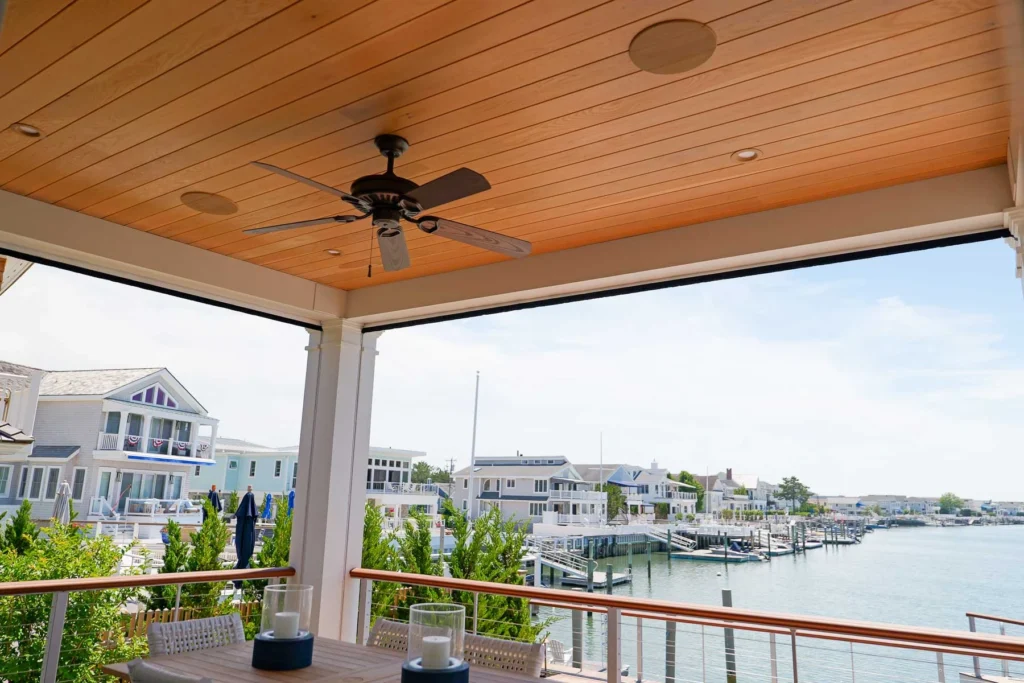
Outdoor areas may receive heavier use as well. Pools, patios, decks, docks and covered porches may need their own audio, TV, Wi-Fi and security planning. Coastal exposure should also be considered when choosing outdoor speakers, cameras, mounts and enclosures. Products should be selected according to the environment and the conditions of the specific installation.
Can an Existing Home Still Be Upgraded?
Yes. Retrofit projects are a regular part of our work. Existing homes can often be upgraded discreetly and thoughtfully, although the available wiring and concealment options depend on the structure. New construction generally provides more flexibility for wiring paths, speaker placement, equipment locations and future expansion.
The same principle applies to major renovations: the earlier technology planning begins, the more options are likely to remain available.
Start Planning Before Construction Decisions Are Finalized
CoolTronics works with homeowners, builders, architects and designers to plan integrated technology for new construction and major renovations throughout Avalon, Stone Harbor, and surrounding Jersey Shore communities. Bringing the technology team into the conversation early helps create a cleaner, more reliable system that feels considered as part of the home — not added after the fact.
Smart home installation for new construction is easier, cleaner, and more flexible when it’s planned early.
Planning a new home or major renovation at the Jersey Shore? Contact CoolTronics to discuss smart home wiring, automation, audio, lighting, networking and security before construction decisions are finalized.